How Domain Parking Revenue Affects a Domain’s Resale Value
Introduction
A parked domain can earn money while its owner waits for a buyer. That income may seem like a clear advantage, but it doesn’t settle the resale price. Buyers will want to know what drives the earnings, whether they are likely to continue and how the domain might perform in active use.
Parking revenue can mean different things. A modest, steady income from relevant visits may carry more weight than a larger total driven by a temporary spike or low-quality clicks. It’s best to treat domain parking revenue as evidence about the domain, not as a substitute for assessing its value.
The contenders: owners, buyers and the domain
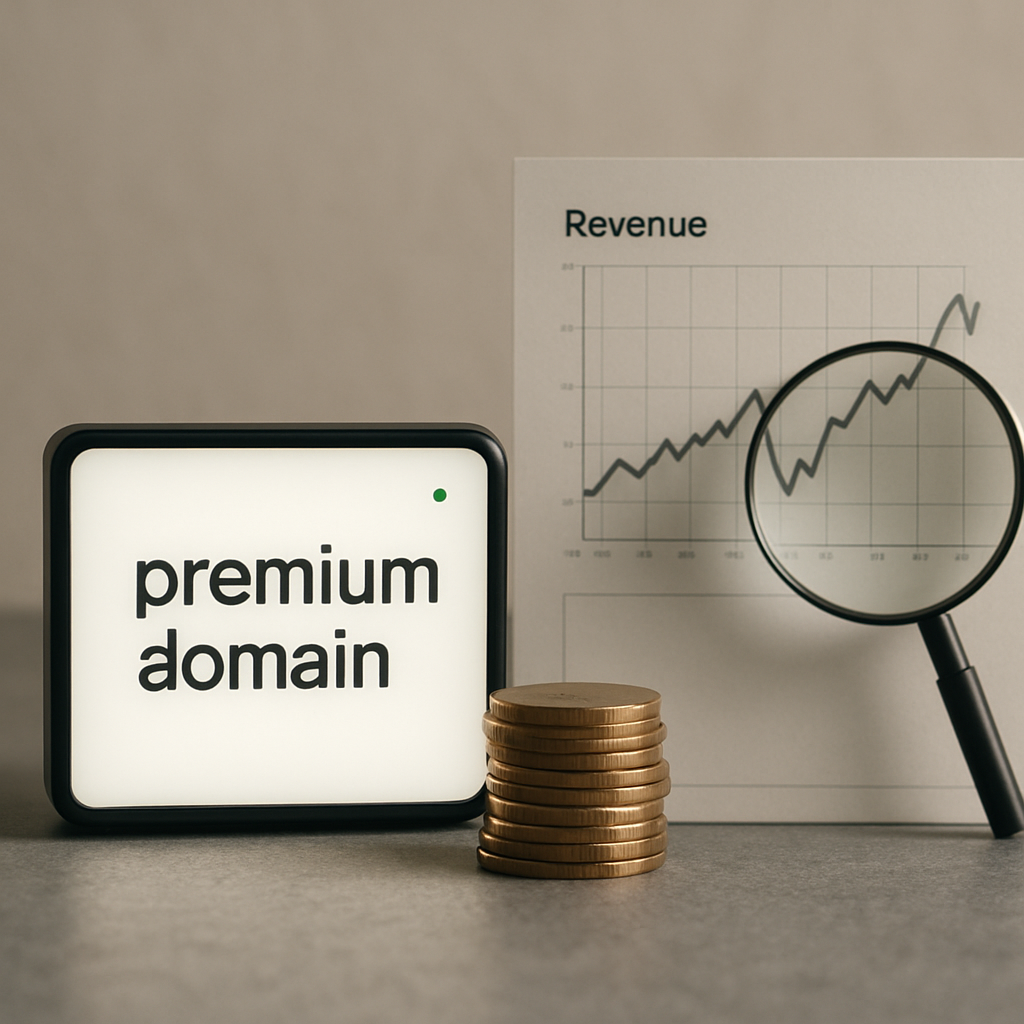
The seller’s argument is straightforward: advertising income shows that the domain attracts some commercial interest. If visits come from direct navigation or established links, they may indicate that people recognize or encounter the name. A documented record of domain parking revenue also gives buyers something concrete to assess.
But buyers aren’t purchasing past earnings alone. They’re buying control of the domain and whatever traffic, brand associations and business opportunities come with it. The value depends on how useful those assets are for a future owner—and whether the current performance will continue after the sale.
The domain’s own qualities may matter more than its monthly parking revenue. A short, memorable name with a clear commercial use can attract buyers even if it earns little today. A confusing or legally risky name may be hard to sell despite a steady stream of clicks. In that context, domain parking revenue is only one part of the resale valuation.
Parking revenue is one factor among many. It can strengthen the case for a good domain, but it rarely makes up for weak spelling, limited demand or a poor fit with the market.
Key factors
First, consider traffic quality. Reports should break down direct, referral, search and other visits, and show whether those visitors are relevant to potential end users. These traffic metrics help buyers evaluate both the audience and the reliability of domain parking revenue. When sellers can explain where the traffic comes from, buyers can better judge whether it is likely to last.
Volume alone tells little. A spike may come from a short-lived event, a misdirected campaign or another source that won’t recur. Consistent traffic over time is more useful, especially when its source is clear and won’t disappear when the domain changes hands.
Second, look at the stability of earnings. Domain parking revenue can vary with advertising demand, visitor behavior, platform terms and the ads displayed. Buyers will want to see net earnings, not just the best month. A longer, verifiable record is usually more useful than a single peak.
That record needs context. If income came from a temporary spike, presenting the highest month as typical overstates the case. Even steady earnings aren’t guaranteed: a new owner may change how the domain is used, alter its parking setup or attract a different audience.
Third, distinguish income from underlying demand. Advertising revenue shows that some visits can be monetized under particular conditions. It doesn’t prove that a business will want the domain, that visitors will become customers or that domain parking revenue will continue after a sale.
Fourth, assess the name’s appeal on its own. Memorability, spelling, extension, relevance to a commercial category and branding potential all affect the pool of buyers. A strong name can offer both current income and future opportunities. If the domain has little strategic appeal, parking revenue may be its main draw—and that can limit buyer interest.
Fifth, consider risk. Buyers may investigate trademark issues, confusing associations, traffic sources and compliance with advertising rules. If the revenue is difficult to explain, it may raise questions instead of building confidence. Buyer due diligence helps test whether the seller’s claims about domain parking revenue hold up.
Finally, earnings need to be put in context when setting a price. Some buyers may use net income in a financial model; others may focus on comparable sales, branding potential or the value of the name to a particular business. There’s no universal formula for turning monthly domain parking revenue into a sale price. Both the reliability of the income and the domain’s broader value vary.
Match scenario
Consider two domains listed at the same time. The first has a clear, memorable name, steady relevant traffic and verifiable domain parking revenue. The owner can explain where the visits come from and show that they aren’t the result of a brief anomaly. A buyer may view the earnings as useful income while exploring the domain’s broader commercial potential.
The second domain reports higher recent earnings, but its traffic is unpredictable and its source is unclear. The name is awkward, and the seller can’t show whether the visits will continue. The headline figure may carry little weight; a cautious buyer might discount it or treat it as incidental.
The buyer’s goals matter, too. An investor focused on cash flow may care most about consistent net earnings. A company looking for a distinctive brand may focus on fit, memorability and the cost of acquiring a similar name. For that buyer, parking revenue can support the purchase but is unlikely to decide it.
In either case, sellers should separate proven results from future possibilities. Verified past income is evidence. Growth, better monetization and a potential brand launch are opportunities, not guarantees. Keeping the two distinct makes the valuation argument more credible.
Conclusion
Domain parking revenue can strengthen a resale case when it is consistent, transparent and supported by credible traffic. It shows that the asset isn’t entirely dormant and gives buyers a starting point for assessing its economics.
But revenue doesn’t determine the final price. Buyers will also consider the name’s quality, whether its traffic can continue and transfer, the risks they uncover and demand from potential end users. Parking income can improve the case for a domain, but it can’t make it on its own.